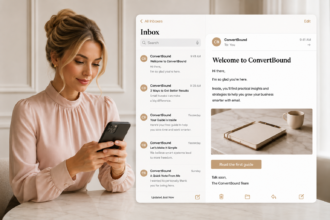



Every email marketing relationship begins with a simple question: does this business deserve more of my attention?
- What New Subscribers Decide First
- How a Welcome Sequence Builds Trust
- When One Email Is Enough, and When It Isn’t
- Common Mistakes and Misconceptions
- Silence After Signup
- Selling Too Soon
- Writing the Sequence Once and Forgetting About It
- Breaking the Promise Made at Signup
- How Welcome Sequences Fit Into an Email Marketing System
- Practical Takeaway
- Where to Go Next
New subscribers make that decision quickly. The emails they receive in the first few days shape their expectations, influence whether they open future messages, and can determine whether the relationship develops at all. That’s why a welcome email sequence is more than an introduction. It sets the tone for everything that follows.
What New Subscribers Decide First
Someone who has just subscribed hasn’t committed to much beyond initial interest. They’re deciding whether signing up was worthwhile, whether future emails deserve their attention, and whether this is a business they want to keep hearing from.
At this stage, they have very little information to judge you by. They may not have used your product, worked with your business, or spent much time with your content. Instead, those first few emails become part of the evidence they use to decide what kind of relationship this is going to be.
That gives early emails more weight than many businesses realise. Once someone has built familiarity and trust with a brand, an occasional average email is unlikely to undo the relationship. At the beginning, there is far less goodwill to fall back on, so a weak first impression can make it much easier for a subscriber to stop opening before the relationship has properly started.
How a Welcome Sequence Builds Trust
A welcome sequence is a series of emails sent automatically after someone joins your email list. Its purpose is not simply to say “welcome.”
A good sequence helps you:
- deliver what the subscriber signed up for
- set expectations for future emails
- introduce your business or brand
- give the subscriber a reason to keep opening
- begin building familiarity before asking for too much in return
Three things matter particularly early on.
Deliver What You Promised
If someone signed up for a guide, discount, checklist, free resource, or other incentive, deliver it quickly and make it easy to access. That first promise is one of the simplest opportunities to build trust.
If the signup form says one thing and the first email delivers something else, or makes the subscriber work unnecessarily hard to find it, the relationship starts with friction.
Set Expectations
Let subscribers know what they can expect from you. That might mean the kind of content you send, how often you email, or the topics you usually cover.
Future emails should feel like a natural continuation of what someone originally signed up for rather than a sudden change in direction.
Give Them a Reason to Open Again
The first email does not need to explain everything about your business. It needs to give someone enough value, relevance, or interest to make opening the next one feel worthwhile.
That is how the relationship begins to build. A simple way to think about the progression is:
Signup → First Impression → Trust → Relationship → Regular Communication
Each stage supports the next. If a business moves directly from signup into ordinary promotional emails without establishing context or trust first, the subscriber is being asked to behave like an established reader before they have been given a reason to become one.
When One Email Is Enough, and When It Isn’t
A welcome sequence does not need to be long to be effective. In some cases, one well-written welcome email is enough. A longer sequence is useful only when the additional emails have a clear purpose.
For example, one email may be enough when:
- the business sends emails infrequently
- the offer is simple
- there is one clear message new subscribers need
- the subscriber mainly needs the promised resource and a short introduction
If one email already delivers what was promised, explains what comes next, and creates a good first impression, adding more messages simply to create a “sequence” may weaken rather than improve it.
A longer welcome sequence makes more sense when there is genuinely more to introduce. That could include:
- several products or services
- a more considered purchase
- an offer that needs explanation
- a strong founder or brand story
- several useful resources worth introducing separately
- different objections or questions that need answering before someone is likely to buy
In those cases, spreading the introduction across several emails can make the experience easier to follow. Each email should still have a clear job.
For example:
Email 1: Deliver what was promised and welcome the subscriber.
Email 2: Introduce the business and what makes it useful or different.
Email 3: Share a valuable resource, idea, or example.
Email 4: Address a common problem, question, or objection.
Email 5: Introduce a relevant product, service, or next step.
That does not mean every business needs five emails. The right length is simply the number of emails needed to introduce the relationship properly without adding messages that exist only because someone decided a welcome sequence “should” contain a certain number.
Common Mistakes and Misconceptions
Silence After Signup
The period immediately after someone subscribes is often when their attention is highest. If nothing arrives for days or weeks, that interest fades. By the time a regular newsletter eventually appears, the subscriber may barely remember signing up.
Silence is not neutral. It wastes one of the best opportunities to establish familiarity while the signup is still fresh in someone’s mind.
Selling Too Soon
Selling in a welcome sequence is not automatically wrong. The problem is asking for too much before giving the subscriber a reason to trust the business.
If the first experience is immediately dominated by sales messages, without delivering the promised value or giving useful context, the relationship can feel transactional from the start. A better sequence earns attention before repeatedly asking for something from it.
Writing the Sequence Once and Forgetting About It
Welcome emails are often created during an initial email marketing setup and then left untouched for years. That is a mistake because these emails are often among the first and most consistently seen messages in an email programme.
They should be reviewed periodically to make sure:
- links still work
- offers are current
- product information is accurate
- the tone still matches the brand
- the sequence still reflects what subscribers were promised at signup
A welcome sequence is part of your ongoing email marketing system, not a one-time setup task.
Breaking the Promise Made at Signup
If someone signs up because you promised a particular resource, discount, or type of content, the first emails need to follow through. A mismatch between the signup message and what arrives afterwards creates distrust very quickly.
If the form says:
Get our weekly practical marketing tips.
and the subscriber immediately receives a stream of unrelated sales emails, the problem is not simply the copy. The expectation itself has been broken.
How Welcome Sequences Fit Into an Email Marketing System
A welcome sequence does not work in isolation. It sits between list building and your ongoing email communication.
Someone discovers the business, decides to subscribe, enters the welcome sequence, and then eventually moves into the normal rhythm of newsletters, campaigns, promotions, or other emails.
A simple email marketing journey might look like this:
Signup form → Welcome sequence → Ongoing emails → Offers and campaigns → Customer relationship
Segmentation can also begin during or after the welcome sequence. For example, subscribers may click on different products, topics, or services during those first emails. Those actions can help you understand what they are interested in and shape what you send later.
The better the introduction, the easier the rest of the email relationship becomes. Subscribers understand who you are, what to expect, and why your emails may be worth opening.
Practical Takeaway
A welcome email sequence is the bridge between someone joining your list and becoming a regular subscriber. Its job is to make that transition feel natural.
A good welcome sequence should:
- Deliver what was promised.
- Introduce the business clearly.
- Set expectations for future emails.
- Give the subscriber something useful early.
- Build enough trust that the next email feels worth opening.
That may take one email or it may take several. The goal is not to create the longest sequence possible. It is to give new subscribers what they need before they enter your regular email marketing.
Where to Go Next
A welcome sequence is only one part of building a healthy email marketing system. From here, it is worth understanding how email deliverability, segmentation, and list building work alongside your welcome emails to determine who receives your messages, how relevant those messages are, and whether they have a good chance of reaching the inbox.